

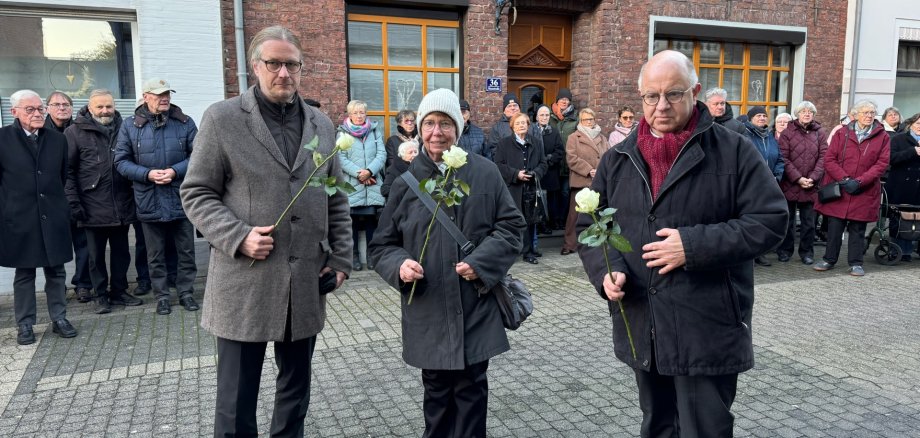
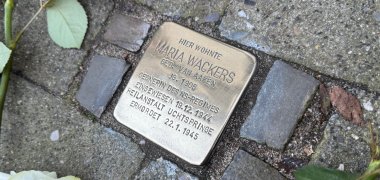
A small brass stone set into the pavement of Maasstraße that invites passersby to pause: Ten years after the Stolperstein for Maria Wackers, a native of Kevelaer, was laid in November 2016, representatives of the city and the church, as well as relatives and friends of the family, gathered on Monday afternoon to commemorate her story.
The Fate of Maria Wackers
Maria Wackers, née van Aaken, was born in Kevelaer in 1906. Together with her husband Josef-Franz, she ran a bakery, pastry shop, and restaurant on Maasstraße. She was the mother of six children. After her husband was drafted to the Eastern Front and Kevelaer was evacuated in the fall/winter of 1944, the family was torn apart. On the train ride to the Magdeburg Gau, Maria Wackers was caught in a heavy bombing raid near Osnabrück, suffered a nervous breakdown, and was admitted to the Uchtspringe psychiatric hospital. When her condition deteriorated again in early 1945—following news of her husband’s severe war wounds and amid the cramped conditions of evacuation—the family, for lack of alternatives, took her back to the clinic in Uchtspringe.
Just 13 days later, she died there under unexplained circumstances. The family was given the wrong date for the funeral, so no one was able to say goodbye. Thanks to extensive research by her relatives and the efforts of her youngest daughter, Elisabeth—who played a key role in uncovering the story of her mother’s life—Maria Wacker is now officially recognized as a victim of the Nazi euthanasia program. Since November 2016, a Stolperstein by Gunter Demnig in front of the house at Maasstraße 35 has commemorated her fate.
10th Anniversary of the Stolperstein Ceremony
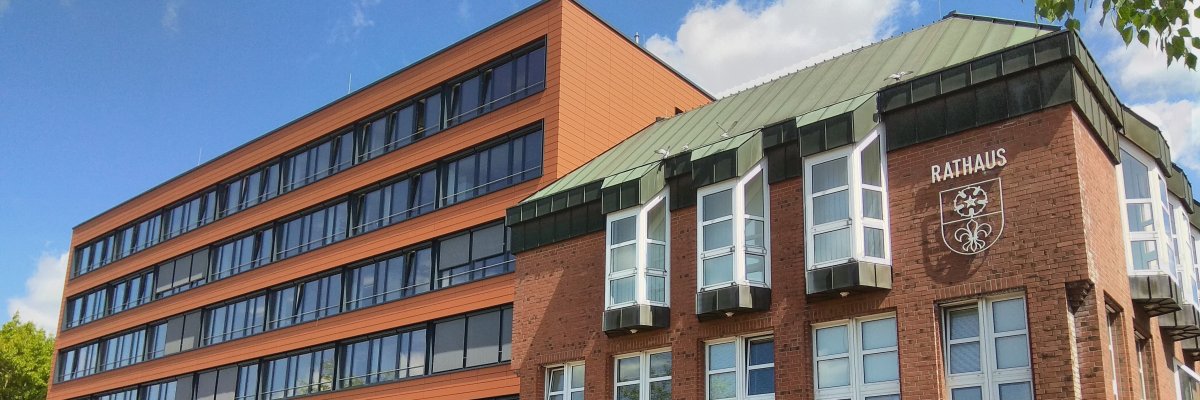
The commemorative events kicked off on Monday afternoon with a press conference at Kevelaer City Hall, hosted by Mayor Dr. Dominik Pichler. In addition to Elisabeth Wackers, the youngest daughter, attendees included City Archivist Till Bodden, Pastor Stefan Dördelmann, members of the press, and friends and relatives of the Wackers family. Following the discussion at City Hall, the participants walked together to the nearby Maasstraße 35, where artist Gunter Demnig had laid the Stolperstein in November 2016. There, Pastor Stefan Dördelmann said a prayer and gave his blessing. In his remarks, Mayor Dr. Dominik Pichler then emphasized the special significance of these small memorials: “The end of the war was over 80 years ago; soon we will no longer be able to interview eyewitnesses. That is why memorials are so important—not only the large ones that remind us of the scale and horror of the war, but especially the small ones like the Stolpersteine. For they connect history with specific names and individual fates.” Afterward, those present laid roses on the stone as a sign of remembrance and observed a moment of silence together.
Background: The Nazi Era in Kevelaer
After the National Socialists seized power in 1933, the political “Gleichschaltung” of the administration and society took place in Kevelaer as well. Although the small, predominantly Catholic pilgrimage town—partly due to Cardinal Clemens August Graf von Galen’s well-known sermons against the killing of the sick—was often perceived as distanced from the regime, exclusion, denunciation, arrests, and persecution were also part of everyday life here. The systematic Nazi euthanasia program aimed at the so-called “extermination of life unworthy of life” had particularly cruel consequences; across the Reich, over 200,000 mentally and physically ill people fell victim to it. Several women from Kevelaer were also deported to sanatoriums and nursing homes and deliberately murdered there with poison or drug overdoses —including, in addition to Maria Wackers, Anna Boland (murdered in 1943 in Obrawalde) and Margaretha Heijmanns (murdered in 1940 in Bernburg), whom Stolpersteine in the city now commemorate.